
Phishing scams in the auto logistics industry are becoming more common and more sophisticated. But understanding the warning signs, how to defend against them, and where to report scams significantly reduces your risk, and creates a safer marketplace for everyone.
Know the Warning Signs
The most common phishing scam is credential harvesting. Bad actors will impersonate Ready Logistics or another legitimate company via an email or text, then direct you to a fake website designed to steal your login credentials, payment details, or US DOT information. Watch out for these warning signs, so you can identify attacks before they start.

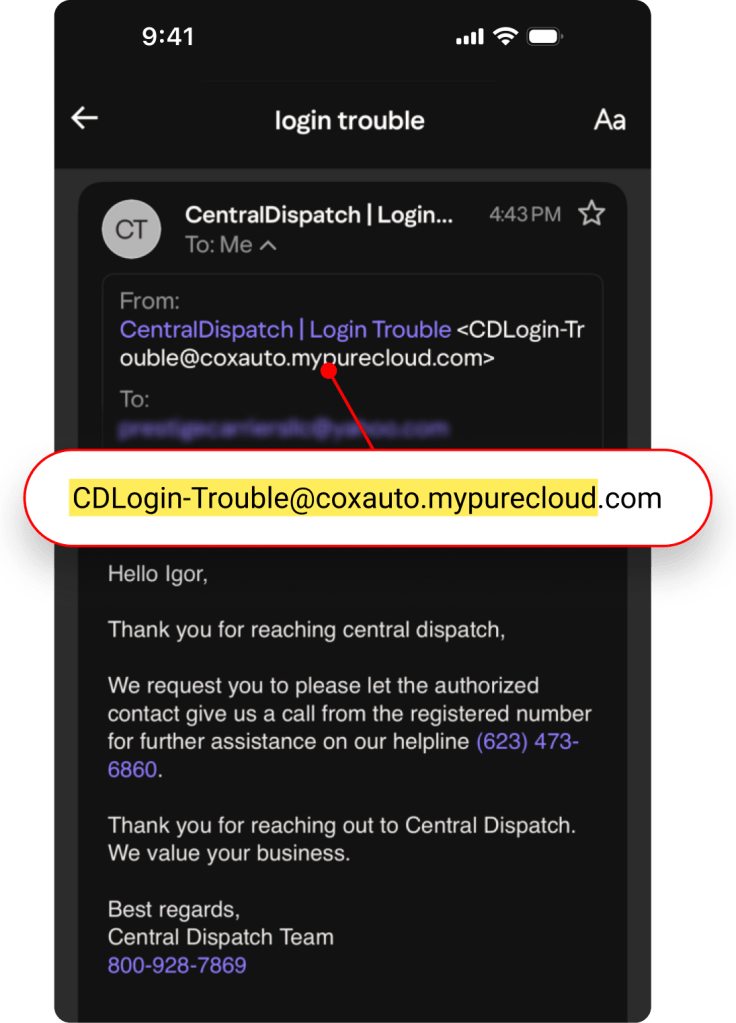
Unusual Sender Email: Phishing emails will always come from lengthy, complex, or otherwise strange-looking email addresses. Some may have subtle alterations or special characters like “support@rëadylogistics.com”.
All legitimate emails from us will have email addresses ending in readylogistics.com, coxautoinc.com, or centraldispatch.com, such as:
- reply@messages.readylogistics.com
- noreply@messages.readylogistics.com
- carrierrelations@coxautoinc.com
- CarrierAssurance@coxautoinc.com
- reply@messages.centraldispatch.com
Lookalike Domains: Though scammers can create fake websites that look nearly identical to the official Ready Logistics site, they always use domains with noticeable character changes. Legitimate URLs will always contain the Ready Logistics or other Cox Automotive property name with no special characters or alterations, such as: readylogistics.com, centraldispatch.com, or mylogisticshub.com. Some scammers may leverage legitimate URLs to appear more credible.
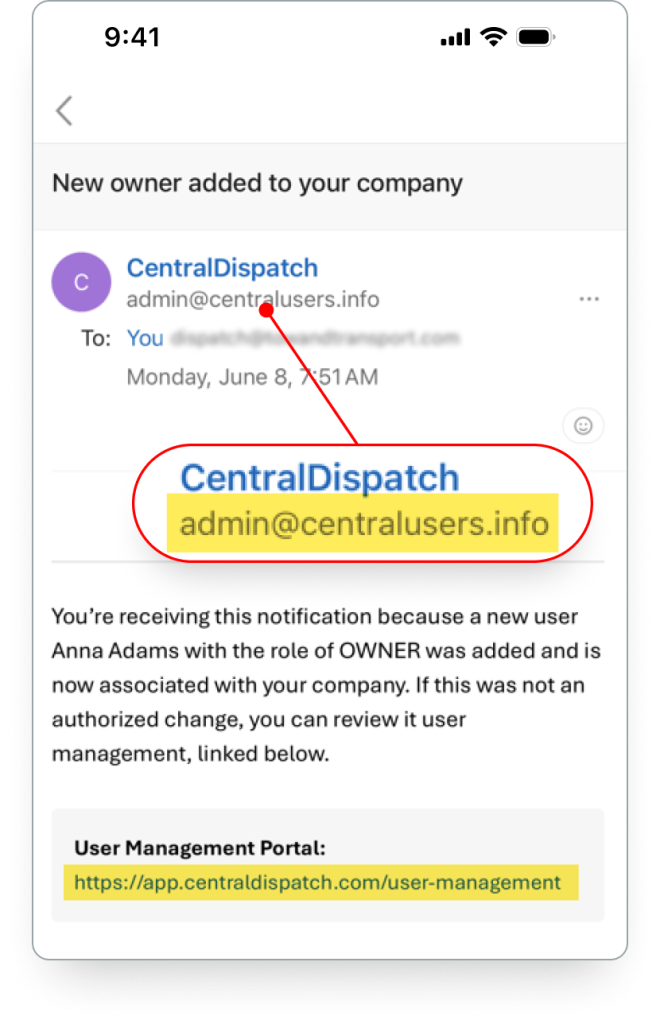
Urgent or Threatening Language: Phishing scams typically use intense language in order to get you to act fast without thinking. Be wary of any messages with sentences like: “Act now or your account will be locked” or “Your service will be discontinued.”

How to Protect Yourself
Use Extreme Caution: We will never ask for passwords, credit card details, ACH, or US DOT information through email or text. Any message directly requesting you to provide this information is very likely a phishing scam.
In the event that our claims department sends you a link for payment, we will always inform you ahead of time, so you know exactly when to expect an email with a payment request.

Verify Sender Email & URLs: Closely examine messages before clicking any links or downloading attachments. Hover over or click on the sender’s display email name to reveal the true address and see if it looks unusual. Be sure to double check all domains and URLs for extra letters, special characters, or alterations.
Secure Your Account: Carriers can add an extra layer of security to their account by setting up User Management on the Private Marketplace driven by Central Dispatch. This gives each user in their organization their own set of login credentials, and lets them control their access to sensitive information—dramatically reducing the risk and impact of stolen credentials.
Report Suspicious Activity: If you receive a suspicious message or believe you’ve fallen victim to fraud, file a fraud claim with us. It helps our security team track scam patterns, investigate cases, and provide you with more personalized security guidance.
Report any concerns of suspicious activity or file a fraud claim at IntegrityAssurance@coxautoinc.com.
Security isn’t just a technology challenge—it’s a shared responsibility between platforms and the people who use them. So while your awareness remains your strongest defense, we’re continually working behind the scenes to root out bad actors, and create new tools to help you stay safe.